
Summary
“Confused by the paperwork? We simplify the RTA vehicle registration process for 2026, covering everything from the Tasjeel test to printing your new Mulkiya in minutes.”
You have found the perfect car. You have negotiated the price, checked the history, and shook hands with the seller. The car is parked in front of you, ready to go.
But you can’t drive it home yet.
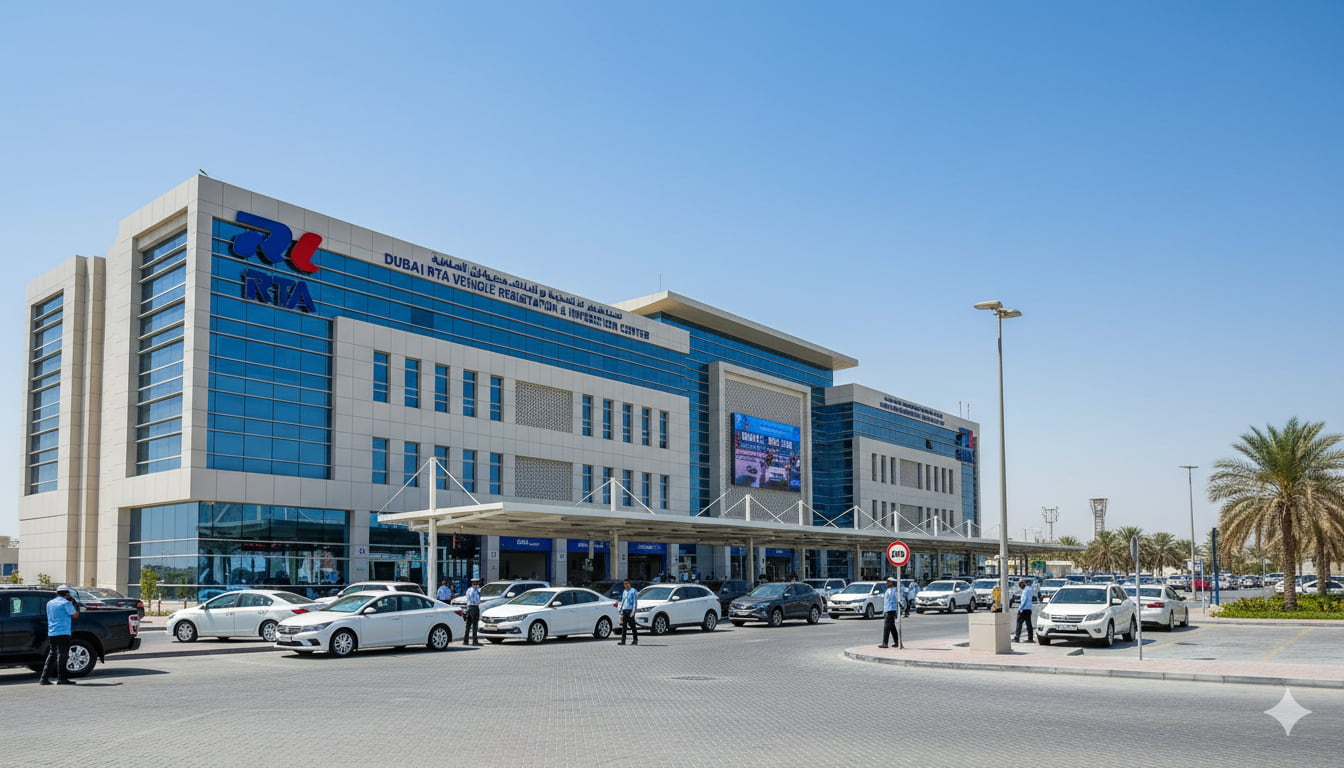
Before you can legally drive any vehicle in the UAE, you must complete the RTA vehicle registration process. Driving an unregistered vehicle is a serious offense that can lead to fines, black points, and even vehicle impoundment.
For many expats and first-time buyers in Dubai, the thought of government paperwork causes anxiety. Will it take all day? Do I have the right papers? How much cash should I bring?
The good news is that Dubai’s Roads and Transport Authority (RTA) has one of the most efficient systems in the world. If you are prepared, the entire process can take less than an hour.
In this 2026 guide, MMD Cars Dubai provides a definitive checklist of costs, documents, and steps for car registration Dubai, ensuring you sail through the process without a hitch.
Prerequisites Before You Go to RTA
Do not rush to the registration center (Tasjeel, Shamil, etc.) just yet. If you don’t check these three things first, you will be sent home.
1. Clear All Traffic Fines
This is the golden rule. The RTA system blocks any transaction if there are outstanding fines.
- For the Seller: They must clear all fines on the car being sold.
- For the Buyer: You must clear all fines on your traffic file (even if they are from a different car).
- Tip: Check your fines on the Dubai Police app before leaving home.
2. Valid Residency Status
To register a car in Dubai (Dubai Number Plates), you generally need:
- A Dubai Residence Visa.
- OR A valid Tenancy Contract (Ejari) in Dubai if your visa is from another Emirate (e.g., Abu Dhabi or Sharjah).
- OR Proof that you own a company/property in Dubai.
3. Valid UAE Driving License
You must have a valid driving license linked to your Traffic File to register a vehicle in your name.
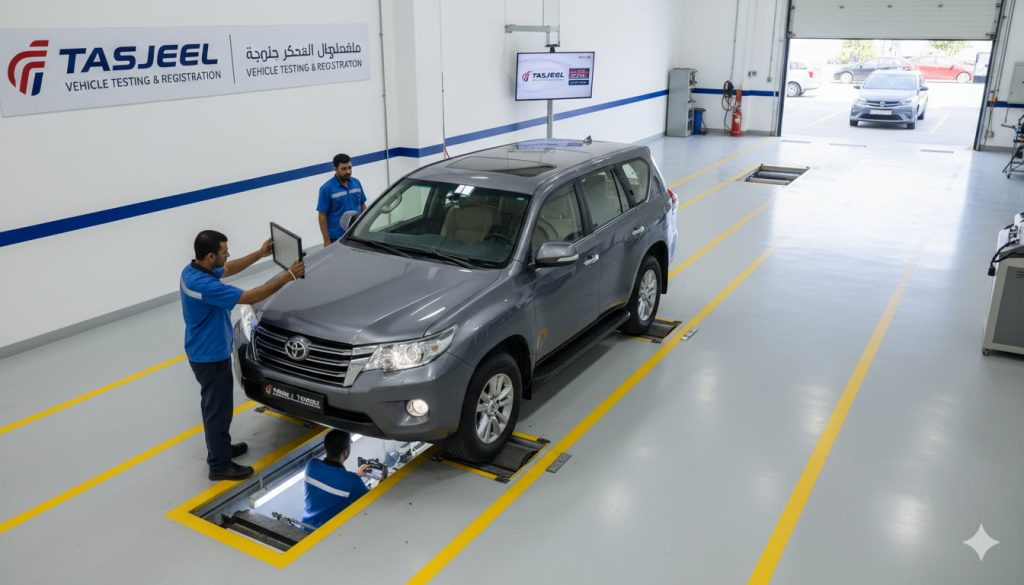
Step 1: The Vehicle Inspection (Tasjeel / Shamil)
Unless you are buying a brand new car from the showroom (which is usually pre-registered), every used car older than 3 years must pass a technical inspection.
Where to go:
Authorized testing centers like Tasjeel, Shamil, Wasel, or Mumayaz.
What happens:
- Drive the car into the testing bay.
- Hand over the old Mulkiya (Registration Card) to the inspector.
- Wait in the waiting area.
- The inspectors check the brakes, emissions, lights, tires, and chassis number.
The Outcome:
- Passed: You get a certificate valid for 30 days. You can proceed to registration.
- Failed: You get a report listing the faults. You must fix the car and bring it back for a re-test (usually AED 35-70 fee).
Cost: Approx AED 170.
Step 2: Buying Car Insurance
You cannot complete the RTA vehicle registration process without valid insurance.
Important Change: You do not need a physical paper policy anymore. Insurance companies in the UAE are electronically linked to the RTA system. When you buy the policy, ask them to “upload the policy to the RTA.” It usually appears in the system within 10 minutes.
Timing: Do not buy the insurance until the car has PASSED the test (Step 1). If the car fails and you can’t fix it, you might have wasted money on insurance.
Step 3: Documents Required for Registration
This is where most people get stuck. Make sure you have the following ready.
For the Buyer (Individual):
- Original Emirates ID: Mandatory.
- Driving License: Copy (or original just in case).
- Residence Visa Copy: To prove Dubai residency.
- Insurance Policy: (Electronic upload is fine, but having the reference number helps).
For the Seller (Individual):
- Original Emirates ID.
- Original Mulkiya: The current vehicle registration card.
- Number Plates: If the buyer wants new plates, the seller must unscrew the old ones and hand them over.
If Bank Finance is Involved:
If you are taking a loan (or the seller is clearing a loan):
- Mortgage Release Letter: (From Seller’s bank) proving the car is debt-free.
- Mortgage Add Letter: (From Buyer’s bank) instructing RTA to register the car with a mortgage.
- Note: These are now done electronically between banks and RTA.
Step 4: The Ownership Transfer Process (For Used Cars)
Once the test is passed and insurance is active, you proceed to the customer service counters for the vehicle transfer UAE.
- Ticket: Take a token for “Vehicle Registration / Transfer.”
- Verification: The officer will check the IDs of both buyer and seller.
- Signature: Both parties sign the digital transfer agreement pad.
- Payment: You pay the transfer and registration fees.
- Plates: If changing plates, you hand over the old ones and receive new ones.
Note regarding Sales Agreements:
If buying privately, do not hand over the cash until you are at the RTA counter and the officer confirms the car is clear to be transferred. This protects you from scams.
Step 5: Fees Breakdown (2026 Update)
Budgeting is key. Here is what you should expect to pay during the RTA vehicle registration process. (Note: Prices are subject to RTA updates).
- Vehicle Test (Tasjeel): AED 170.
- File Opening (New Drivers): AED 220 (If it’s your first car ever).
- Vehicle Registration Fee: AED 400 – AED 420.
- Transfer of Ownership Fee: AED 350 – AED 520 (Depends on vehicle size).
Number Plates:
- Short Plate: AED 35 each.
- Long (Sport) Plate: AED 50 each.
- Dubai Brand Plate (Color logo): AED 420.
- Knowledge/Innovation Fees: Approx AED 20 per transaction.
Total Estimate:
Bring approximately AED 1,200 to AED 1,500 in cash or card to cover all government fees (excluding insurance).
Step 6: Receiving the “Mulkiya” and Plates
Once the fees are paid, the final step is the most satisfying.
- The Mulkiya: The officer (or a kiosk) will print your Vehicle License Card (Mulkiya). It is a gold-colored plastic card.
- Check it immediately: Ensure your name, the plate number, and the expiry date are correct.
- The Plates: Collect your new number plates from the plate factory section (usually in the same building).
- Stickers: Since 2018, the RTA stopped issuing expiry stickers for the rear number plate. You do not need to stick anything on the plates.
Don’t Forget Salik:
Before you drive onto Sheikh Zayed Road, buy a Salik Tag (AED 100) from the petrol station inside the testing center. Stick it on your windshield and activate it via the app to avoid fines.
Special Scenarios
Scenario A: Visa from Another Emirate
If your visa is from Abu Dhabi but you live in Dubai:
- You must provide an Ejari (Tenancy Contract) registered in your name in Dubai.
- Or, provide a DEWA bill in your name.
- Without this, RTA will ask you to register the car in Abu Dhabi.
Scenario B: Buying a Company Car
If the buyer is a company:
- Trade License Copy.
- Letter from the company authorizing the PRO/Manager to register the car.
- The representative must be present with their ID.
Scenario C: Classic Cars
Cars older than 30 years undergo a different testing procedure at the Automobile Touring Club of UAE (ATCUAE) before RTA registration. They get special “Classic” brown plates.
How MMD Cars Simplifies This
Reading this list might feel like a lot of work. That is why smart buyers choose MMD Cars Dubai.
When you buy a car from us, we handle the entire RTA registration headache for you.
- We ensure the car passes the test before you even see it.
- We have insurance partners ready to upload the policy.
- Our PRO handles the counter work.
- You simply sign and receive your Mulkiya.
We turn a 3-hour process into a 15-minute coffee break.
FAQ Section
Q: Can I register a car if I am on a Tourist Visa?
A: No. You strictly need a valid Emirates ID and Residence Visa to register a car in your name. Tourists can only rent or lease vehicles.
Q: How long does the Mulkiya last?
A: Vehicle registration is valid for 12 months. Insurance is usually valid for 13 months (giving you a 1-month grace period to renew).
Q: Can I keep the seller’s insurance?
A: Generally, no. Insurance is non-transferable in most cases. You must buy a new policy in your name. The seller can cancel their policy and get a refund.
Q: What if the car fails the Tasjeel test?
A: You cannot register it. You must take the car to a mechanic, fix the specific issues listed in the report, and bring it back for a re-test.
Conclusion
The RTA vehicle registration process is the final hurdle between you and the open road. While it involves several steps testing, insurance, documents, and fees it is a structured and transparent system designed to keep unsafe cars off the road.
By having your documents ready and your fines cleared, you can complete the process in under an hour.
Want to skip the queue?
Visit MMD Cars Dubai. We offer a seamless buying experience where the registration is part of the package. Drive away in your new car without the paperwork stress!